
If you were diagnosed with cancer after years of using Roundup weed killer, you don’t need background history — you need a clear answer. The most important question is simple: What Cancers Are Included In The Roundup Lawsuit in 2026?
Here is the direct, up-to-date answer:
As of 2026, the Roundup lawsuit primarily includes non-Hodgkin lymphoma (NHL) and several of its medically recognized subtypes. Most successful lawsuits and settlements are based on this specific category of blood cancer.
Everything else is secondary, limited, or generally not included.
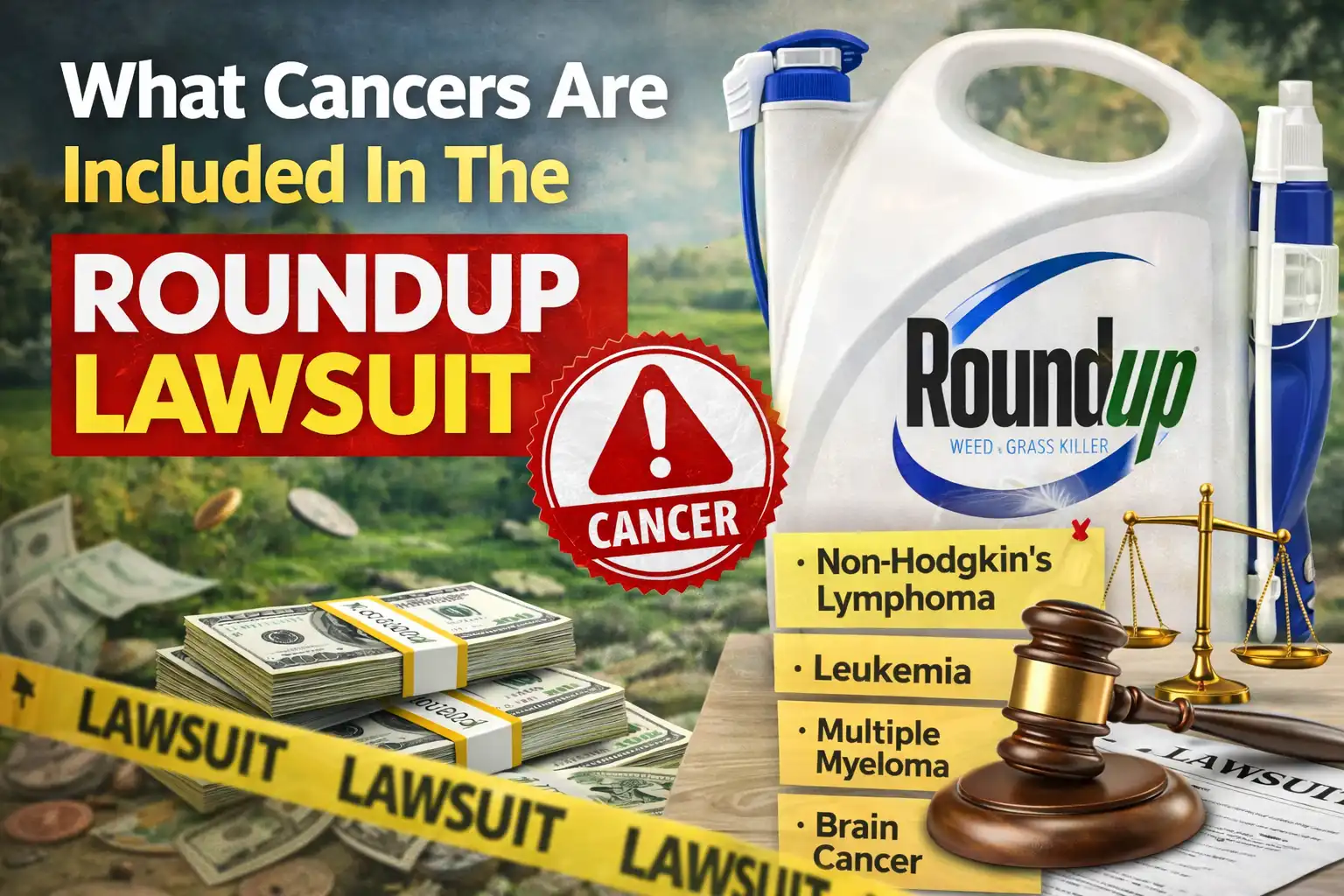
The Primary Cancer Included: Non-Hodgkin Lymphoma (NHL)
The core of Roundup litigation centers on non-Hodgkin lymphoma, a cancer that affects the lymphatic system — the part of the immune system that helps fight infection.
Thousands of plaintiffs across the United States alleged that exposure to glyphosate, the active ingredient in Roundup, contributed to their diagnosis of NHL.
Roundup was originally developed by Monsanto and later acquired in 2018 by Bayer AG. Since then, Bayer has faced extensive litigation over claims that long-term glyphosate exposure increases the risk of non-Hodgkin lymphoma.
As of 2026, non-Hodgkin lymphoma remains the central and most consistently recognized cancer in Roundup lawsuits.
Roundup Lawsuit Status in 2026
Roundup litigation has evolved significantly since the first major trials.
| Year | Major Event |
|---|---|
| 2015 | Glyphosate classified as probably carcinogenic |
| 2018 | First major jury verdict in favor of plaintiff |
| 2019 | Multi-million and billion-dollar verdicts |
| 2020 | Over $10 billion settlement framework announced |
| 2021–2025 | Continued individual claims and appeals |
| 2026 | New cases still filed, primarily for NHL diagnoses |
Although large settlement programs have already paid out billions, new non-Hodgkin lymphoma cases continue to be evaluated.
Subtypes of Non-Hodgkin Lymphoma That May Qualify
Non-Hodgkin lymphoma is not one single disease. It includes multiple subtypes, many of which have appeared in Roundup claims.
Below is a structured overview of commonly included subtypes:
| Non-Hodgkin Lymphoma Subtype | Typically Included in Roundup Cases? |
|---|---|
| Diffuse Large B-Cell Lymphoma (DLBCL) | Yes |
| Follicular Lymphoma | Yes |
| Mantle Cell Lymphoma | Yes |
| Small Lymphocytic Lymphoma (SLL) | Yes |
| T-Cell Lymphomas | Sometimes |
| Chronic Lymphocytic Leukemia (CLL)* | Case-dependent |
*CLL is sometimes considered alongside SLL because they are closely related conditions.
If your pathology report confirms one of these diagnoses and you have a documented history of Roundup exposure, you may fall within the scope of current litigation.
Is Hodgkin Lymphoma Included?
No, in most cases, Hodgkin lymphoma is not included in the Roundup lawsuit.
The scientific evidence and major jury verdicts have focused almost exclusively on non-Hodgkin lymphoma. While every case depends on specific medical facts, Hodgkin lymphoma is generally not part of the main Roundup litigation framework.
Are Other Cancers Like Leukemia or Multiple Myeloma Included?
As of 2026, Roundup lawsuits are overwhelmingly focused on non-Hodgkin lymphoma. Other cancers are far less commonly accepted.
Here’s how they stand:
-
Leukemia: Some cases have explored claims, but not consistently recognized.
-
Multiple Myeloma: Rarely included in major settlement programs.
-
Solid Tumors (lung, breast, colon, prostate, etc.): Generally not included.
-
Brain cancer or pancreatic cancer: Not typically part of Roundup litigation.
Unless future scientific evidence changes the legal landscape, non-Hodgkin lymphoma remains the primary qualifying cancer.
Other cancers are generally not part of the main settlement structure unless supported by strong scientific and legal evidence.

- Short-Term Rental Laws: What Property Owners Should Check Before Listing a Home - September 28, 2026
- Privacy Laws Every Internet User Should Understand - July 31, 2026
- Jake Paul Anthony Joshua Lawsuit - June 25, 2026