
Understanding who can file a wrongful death lawsuit in California is essential if you want to protect your family’s legal rights and pursue compensation after a tragic loss. California’s wrongful death laws outline a clear order of eligibility, ensuring that the people most closely affected by the loss can seek justice.
This guide explains which family members can file a wrongful death claim, how eligibility works, and what compensation may be available in 2026. Whether you are a spouse, child, parent, or dependent relative, knowing your legal standing can help you take the next steps with confidence.
Primary Family Members Eligible to File a Wrongful Death Claim
California law prioritizes immediate family members when determining who can file a wrongful death lawsuit. These individuals typically have the strongest legal claim because they are presumed to have suffered the most direct loss.
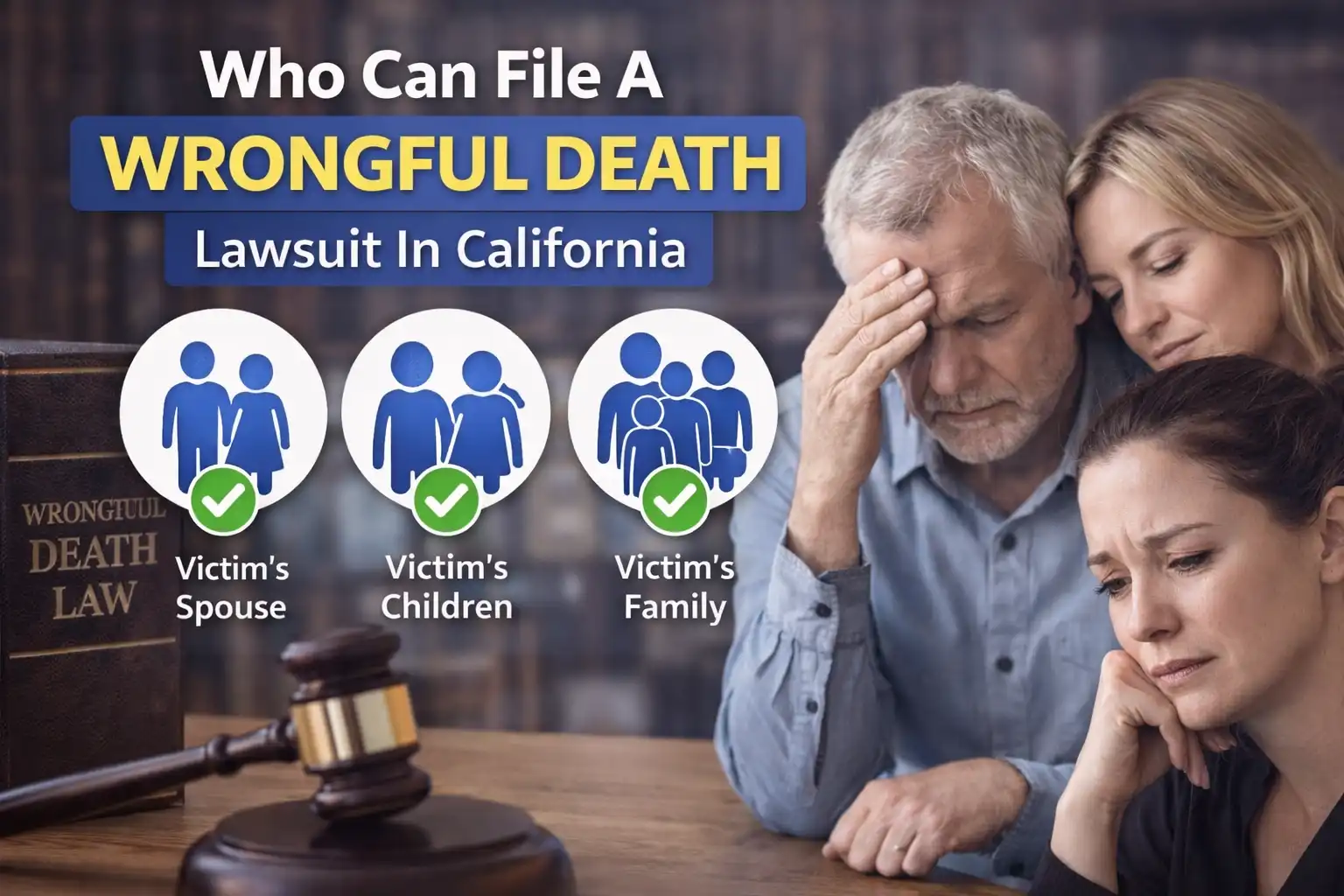
The following relatives usually have the first right to file a wrongful death lawsuit:
| Eligible Party | Legal Relationship | Typical Role in Lawsuit |
|---|---|---|
| Spouse | Legally married partner of the deceased | Primary claimant |
| Domestic Partner | Registered domestic partner under California law | Equal standing to spouse |
| Children | Biological or legally adopted children | Co-claimants |
| Grandchildren | If the deceased child has also passed away | May represent the child’s claim |
If one or more of these individuals exist, they typically file the lawsuit together as a group of plaintiffs.
For example, if a married person with two children dies in a car accident caused by negligence, the spouse and children would usually file the wrongful death claim jointly.
When Children or Spouses Are Not Present
Sometimes the deceased person did not leave behind a spouse or children. In these situations, California law allows other relatives to pursue the claim.
If the primary heirs are absent, the right to file may extend to individuals who would inherit the estate under California’s intestate succession laws. These may include parents, siblings, or other close relatives.
Examples include:
-
Parents of the deceased
-
Siblings
-
Other relatives entitled to inheritance
This expansion ensures that families still have legal recourse even if the deceased was unmarried or had no children.
What Happens If There Is No Spouse or Child?
When the deceased person does not leave behind a spouse, domestic partner, or children, California law expands eligibility to other family members according to the rules of intestate succession—the same system used when someone dies without a will.
In these cases, the right to file may pass to:
-
Parents
-
Siblings
-
Other relatives who would inherit under California inheritance laws
This ensures that someone with a legitimate familial connection can still pursue justice for the loss.
For instance, if a single adult with no children dies due to medical malpractice, their parents could potentially bring a wrongful death claim.
Financial Dependents Who May Qualify to File
California law also recognizes that some individuals may depend financially on the deceased even if they are not immediate family members. In certain circumstances, these dependents can join or initiate a wrongful death claim.
Potential qualifying dependents include:
-
A putative spouse (someone who believed they were legally married)
-
Children of a putative spouse
-
Stepchildren who relied on the deceased for financial support
-
Parents who were financially dependent on the deceased
These individuals must typically prove at least partial financial dependence on the person who died.
For example, if a stepchild relied on the deceased for housing and daily expenses, they may qualify as a claimant in the lawsuit.
Filing a Single Lawsuit for All Eligible Parties
California generally requires all eligible heirs to join together in a single wrongful death lawsuit. This rule prevents multiple lawsuits from being filed for the same death.
In practice, this means:
-
One case is filed on behalf of all eligible heirs
-
Each person’s losses are evaluated separately
-
Any compensation is divided among the claimants
If someone eligible chooses not to participate, they may still be listed in the lawsuit but decline to claim damages.
The loss of a loved one due to negligence is an overwhelming experience, but California law provides a pathway for families to seek accountability and financial support. Understanding who can file a wrongful death lawsuit in California ensures the right individuals take legal action and that the case proceeds without unnecessary complications.
In most situations, spouses, domestic partners, and children hold the primary right to file. However, parents, siblings, dependent stepchildren, and other qualifying individuals may also have legal standing depending on the circumstances.

- Short-Term Rental Laws: What Property Owners Should Check Before Listing a Home - September 28, 2026
- Privacy Laws Every Internet User Should Understand - July 31, 2026
- Jake Paul Anthony Joshua Lawsuit - June 25, 2026